

Riding a motorcycle in the Bronx is a dynamic and exhilarating experience, unlike any other in New York City. The borough’s bustling streets and varied road surfaces present both opportunities for freedom and real hazards. Every rider should recognize the value of practicing fundamental safety habits, not only for personal protection but also to avoid costly accidents. If you’ve been involved in a crash or want guidance on your legal rights, consulting a motorcycle accident lawyer in Bronx can make a significant difference in your outcome.
Adapting to the Bronx’s distinctive environment is essential for every motorcyclist. Its mix of major highways, urban neighborhoods, and congested intersections requires extra precaution and attention. Even seasoned riders must stay vigilant as unpredictable drivers and poorly maintained roads increase risk on every journey.
Understanding Bronx Roadway Challenges
The Bronx is notorious for its intricate mix. Every Bronx motorcyclist must beware of sudden construction zones. Commuter routes such as the Cross Bronx Expressway and the Bronx River Parkway experience heavy traffic at all hours of the day, with motorists often in a hurry or distracted. Riders need to prepare for frequent lane changes, sudden stops, and unpredictable road debris. Even surface streets can change rapidly, with potholes, faded lane markings, and parked cars adding to the unpredictability. Awareness of such conditions can help riders anticipate problems before they arise, making for a much safer commute.
In addition to heavy traffic, frequent road repairs, and seasonal weather patterns, which often leave surfaces uneven and hazardous, like loose gravel or standing water. Learning how these challenges affect your ride will empower you to navigate more safely.
Essential Protective Gear
It’s important that every Bronx motorcyclist wear the right protective gear, far beyond the basics required by law. New York State mandates the use of Department of Transportation (DOT)-approved helmets, which statistics show can prevent fatal injuries in nearly four out of ten crashes. Riders should also invest in high-quality full-face helmets to ensure maximum protection for the jaw and face in the event of an accident. Sturdy gloves, boots, and abrasion-resistant jackets and pants protect against road rash and reduce the severity of injuries if you fall or get into a slide.
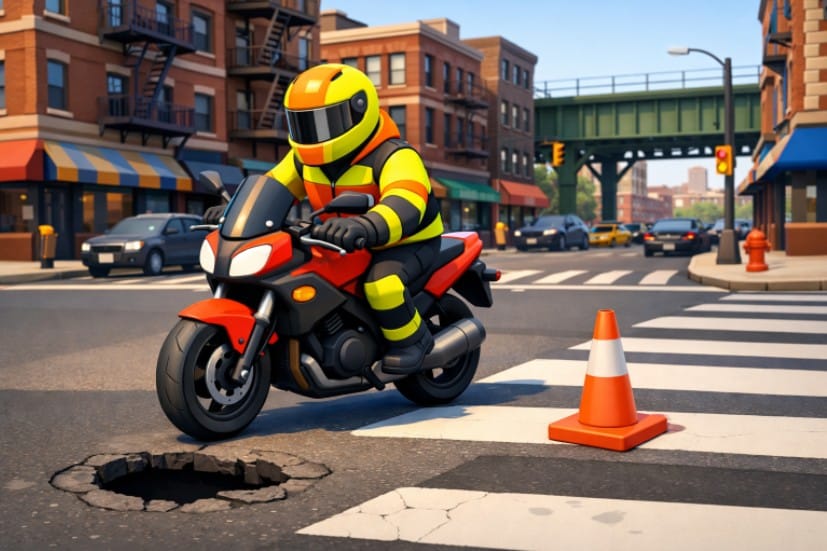
Reflective or brightly colored clothing also boosts your visibility in traffic. Since many accidents occur when drivers fail to see motorcyclists, anything that helps you stand out can be invaluable. For more details on how safety gear can save lives, check out this comprehensive crash data from the National Highway Traffic Safety Administration.
Defensive Riding Techniques
Maintaining Safe Distances
Keeping a safe cushion between your motorcycle and the vehicles around you gives you critical time to react to sudden stops, swerves, or debris. Aim to leave at least a two-second gap under normal conditions, and increase it during rain or poor visibility. Avoid tailgating, as even a minor tap can send a motorcyclist down.
Enhancing Visibility
Use your headlights at all times, regardless of the weather or lighting conditions. This not only makes it easier for you to see hazards, but also makes you more visible to other drivers. Wearing reflective garments and positioning yourself in a lane where you won’t be hidden in blind spots further increases your safety margin.
Anticipating Driver Actions
Always be alert for the unexpected. Drivers in the Bronx may change lanes abruptly, make illegal U-turns, or open car doors without warning. Look for signals such as a driver’s head movement, the flicker of a turn indicator, or wheels turning. Proactive scanning and anticipation can help prevent many common scenarios that result in motorcycle accidents.
Regular Motorcycle Maintenance
A well-maintained motorcycle not only operates better but also responds more predictably in emergencies. Take time at least once a week to check every key component: test brake responsiveness, inspect tire pressure and tread, and double-check all lights and signals. If anything feels off during a ride, address it promptly to prevent breakdowns or accidents. Consider following a routine maintenance checklist, such as those recommended by motorcycle safety experts at NHTSA.
Participating in Safety Training Programs
Formal safety courses offer hands-on experience dealing with critical riding scenarios. The New York State Motorcycle Safety Program (NYSMSP) offers classes for new and advanced riders that cover key skills such as emergency braking, accident avoidance, and defensive maneuvering. Enrollment in these programs often qualifies participants for insurance discounts and provides confidence on the streets. Even seasoned riders benefit from periodic refreshers to break bad habits and learn the latest safety strategies.
Staying Informed About Local Traffic Laws
The rules for motorcyclists in New York differ from state to state and even from borough to borough in how strictly they are enforced. Lane splitting (riding between lanes of halted or slow-moving cars) is illegal in New York, and all motorcycles must display working daytime headlights. Knowing such details helps prevent tickets and also improves safety by minimizing risky behaviors. When laws change or new traffic projects affect road layouts, staying up to date through sources like the NYC Department of Transportation can pay dividends in safety and peace of mind.
Conclusion
Motorcycling in the Bronx combines adventure with unique safety demands. By understanding local roadway challenges, investing in proper protective gear, using defensive riding techniques, maintaining your bike, participating in safety training, and staying up to date on local laws, you can reduce risks and enjoy your ride. Safe motorcycling is not just a matter of skill; it’s an ongoing commitment to vigilance, preparation, and learning.