
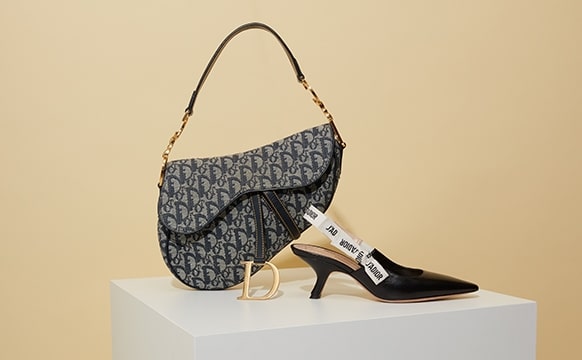
Logo mania has a funny way of returning just when commentators announce its demise. Every few years, a new wave of “quiet” styling and pared-back design promises to dethrone the loud emblem. Yet the monogram—compact, confident, and instantly legible—keeps resurfacing in wardrobes, on accessories, and across digital storefronts. In today’s scroll-heavy marketplace, where attention jumps from plain tees to the ipl cricket batting app and back again, the monogram remains a stubbornly effective shorthand for value. That persistence is not accidental; it is the outcome of decades of cultural negotiation between status, taste, and commerce.
To understand why monograms still sell, it helps to treat them less as decoration and more as infrastructure: a visual system that carries identity, signals belonging, and reduces uncertainty for buyers. The “mania” is not simply about showing off. It is also about recognition, reassurance, and the pragmatic economics of branding in crowded markets.
From Identification Marks to Cultural Symbols
The earliest monograms functioned like signatures. Historically, interlaced initials and simplified marks helped identify makers, protect reputations, and standardize quality—especially when goods traveled farther than their producers. Over time, the monogram shifted from a practical stamp to a cultural symbol. It became a portable shorthand for craftsmanship and continuity, even when production scaled or moved.
That evolution matters. A monogram is unusually efficient: it compresses a brand story into a repeatable unit that works at multiple sizes and on multiple materials. It can sit discretely on a clasp or become a full-surface pattern. This scalability lets companies deploy one core asset across categories, seasons, and price tiers without rebuilding the entire identity each time. In other words, monograms are not merely “trendy”—they are operationally useful.
The Status Economy and the Psychology of Recognition
Monograms thrive because humans are pattern-seeking. We are drawn to symbols that can be read quickly and socially verified. A repeated mark is cognitively “sticky”: it becomes familiar through exposure, and familiarity often reads as credibility. In consumer psychology terms, the monogram reduces perceived risk. It reassures the buyer that the product is anchored in a known system of taste, quality, and resale value.
Status signaling also plays a role, but it is more nuanced than simple showing off. Many consumers participate in a status economy that includes peer recognition, aspirational identity, and personal narrative. A monogram can communicate that someone is “in the know,” or that they have achieved a milestone, or that they belong to a particular urban tribe. Even when people claim to dislike logos, they often still rely on subtle markers—hardware shapes, signature patterns, recognizable typography—to navigate social meaning. The monogram is just the most explicit version of that language.
Cycles of Taste: Quiet, Loud, and the Pendulum Effect
Logo intensity tends to move in cycles. When economic conditions feel uncertain, recognizable symbols can become more desirable because they function as tangible proof of value. When cultural norms favor understatement, brands respond by miniaturizing marks, shifting to tonal patterns, or embedding monograms into textures rather than prints. The mark never disappears; it changes volume.
This pendulum effect is amplified by fashion’s broader dynamic: the need to look “new” while staying recognizable. If a brand abandons its core visual codes completely, it risks becoming interchangeable. If it never evolves, it looks stale. Monograms offer a solution: a stable scaffold that can be reinterpreted through color, scale, placement, and material innovation. A glossy, oversized pattern communicates a different mood than a matte jacquard or embossed leather—yet all of them remain part of the same identity system.
Streetwear, Remix Culture, and the New Logic of Flex
In recent decades, streetwear and remix culture reframed logos as tools of irony, play, and remix rather than strict deference to tradition. The monogram became something to sample, parody, and recontextualize. This did not weaken monograms; it strengthened them by expanding their cultural reach. Once a symbol becomes remixable, it becomes part of the broader visual vocabulary—recognizable even to people who do not buy the original goods.
At the same time, the social logic of “flex” evolved. Visibility migrated from physical spaces to images: social platforms, resale listings, outfit grids, and unboxings. Monograms are camera-friendly. They read well in thumbnails and low-resolution video. They create instant comprehension when viewers have only a second to decode what they’re seeing. In a digital environment that rewards quick recognition, the monogram is a high-performing graphic asset.
Counterfeits, Authenticity, and the Paradox of Popularity
Monograms also live inside a paradox: the more popular the pattern, the more it gets copied—yet the copying can reinforce the original’s cultural centrality. Counterfeits, look-alikes, and “inspired” designs spread the visual code, training more people to recognize it. That recognition, in turn, can increase demand for authentic items among consumers who care about provenance, materials, and legitimate resale value.
Brands respond with evolving authentication methods and subtle design updates: micro-pattern changes, new placements, limited seasonal palettes, serialized tags, and material signatures that are harder to replicate. But even when the market is flooded with imitations, many buyers still pay a premium for the original because the monogram is only one layer of meaning. The deeper value is the promise of consistent quality control, service, and cultural legitimacy.
The Economics of Monograms: A Strategic Asset, Not Just Aesthetic
From a business standpoint, monograms are durable intellectual assets (even when consumers do not consciously think in those terms). A strong monogram lowers marketing costs over time because the symbol itself does heavy lifting: it can headline campaigns, anchor collaborations, and maintain brand recall across changing product lines. It also supports line extensions. When a company moves into new categories—small goods, footwear, accessories, or lifestyle products—a monogram provides immediate continuity.
Monograms can also enable pricing strategy. A “signature” pattern may justify higher margins because it is positioned as iconic rather than seasonal. That icon status creates a sense of timelessness—one of the most profitable stories a product can tell. Timelessness suggests that the purchase is not merely indulgent; it is rational, collectible, and potentially resellable.
Why Monograms Will Keep Selling
Monograms persist because they solve multiple problems at once. They satisfy the consumer’s desire for recognition and story, the brand’s need for continuity and differentiation, and the market’s demand for fast visual comprehension in digital spaces. They are adaptable: loud when culture wants spectacle, muted when culture wants restraint. They are symbolic: capable of carrying heritage, aspiration, humor, and belonging in a compact design.
The future of logo mania will likely look less like a single dominant style and more like a spectrum—micro-marks for discreet tastes, bold repeats for maximalist moods, and new material treatments that make the monogram feel fresh without changing its underlying code. What will not change is the monogram’s core advantage: it is a simple, expressive device that translates identity into an instantly readable signal. In a world where attention is fragmented and choice is overwhelming, that kind of clarity remains an exceptionally sellable commodity.
