


As the digital ecosystem evolves, small businesses must strike a balance between innovation and robust protection mechanisms. New technology, increased regulatory scrutiny, and evolving threats require a flexible approach to safeguarding assets and operations. Establishing digital growth strategies not only fuels expansion but also forms the bedrock for a resilient business. In this heightened risk landscape, proactive defense and strategic planning are crucial for preserving brand reputation and maintaining customer trust.
As attackers continue to find new ways to exploit vulnerabilities, especially among small businesses with limited resources, an adequate protection strategy becomes increasingly crucial each year. Investing in both digital and operational safeguards is necessary not only to protect data and intellectual property but also to ensure business continuity in the event of a disaster.
Moreover, comprehensive protection is not just a technical endeavor—it encompasses employee awareness, third-party relationships, and even financial resilience against emerging risks. Well-rounded risk management allows small business owners to navigate uncertainty and build long-term confidence in their operations.
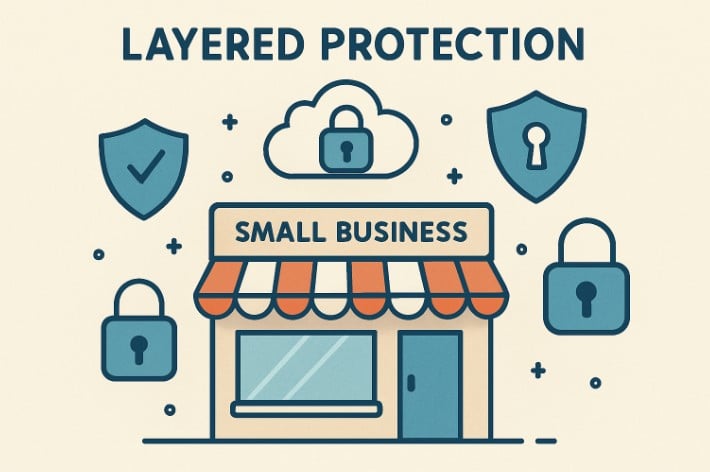
Industry experts recommend adopting a layered defense approach, integrating advanced tools, skilled personnel, and well-chosen insurance policies to shield the enterprise from every angle. The following modern strategies have emerged as best practices for small businesses committed to staying ahead of evolving threats and establishing a sound foundation for future growth.
Escalating Cybersecurity Threats
Small businesses have become prime targets for cybercriminals, who capitalize on limited defenses and resource constraints. Recent industry research reports a sharp increase in cyberattacks against small enterprises, citing over 50% growth in documented breaches in 2025, with data exposures rising by 21% each quarter. Inadequate security measures and outdated systems exacerbate the risk, making it crucial for businesses of all sizes to implement multi-layered digital defenses. Robust firewalls, endpoint protection, and timely software updates are foundational steps to deter unauthorized access and data theft. According to the Cybersecurity and Infrastructure Security Agency (CISA), businesses that prioritize cybersecurity enjoy stronger operational resilience and customer loyalty.
Integrating AI for Enhanced Security
The rapid evolution of artificial intelligence (AI) is significantly transforming how organizations detect and respond to threats. AI-powered security platforms can identify abnormal behavior in real-time, reducing the impact of incidents and automating routine tasks such as threat hunting and response. Despite these benefits, only 11% of small businesses have implemented AI-driven defenses, primarily due to concerns about perceived complexity and cost. Investing in accessible AI-driven tools enables small firms to bridge the security gap, reducing their dependence on manual monitoring and shortening detection times. AI is expected to play an increasingly pivotal role in defending against sophisticated cyber threats.
Embracing Cloud-Native Solutions
Leveraging cloud-native technologies is no longer limited to large corporations. Today, small businesses can leverage cloud platforms to achieve greater scalability and agility. Adopting architectures that prioritize containerization, microservices, and serverless computing minimizes reliance on physical hardware and local infrastructure, reducing points of vulnerability. Continual integration of security—known as DevSecOps— embeds protection into every phase of software development and IT operations. Cloud services also provide robust disaster recovery and data backup options, ensuring operational continuity even in the face of localized disruptions.
The Importance of Employee Training
Even the most advanced security technology can be undermined by human error. In many breaches, employees unwittingly open malicious attachments, fall for phishing scams, or use weak passwords. Ongoing training programs are essential for teaching staff about the dangers of social engineering, safe browsing, and proper data handling. Simulated phishing campaigns and up-to-date best practices help instill a culture of awareness throughout the organization, fostering a proactive approach to cybersecurity. By championing cyber hygiene, businesses can proactively thwart a significant percentage of attacks before they reach critical assets.
Comprehensive Insurance Coverage
While preventative measures are essential, risk cannot be eliminated. Comprehensive business insurance serves as a financial safeguard when accidents, breaches, or disruptive events occur. Policies may cover a wide range of incidents, including cyber liability, data loss, physical property damage, and legal expenses. Choosing the right coverage tailored to the company’s unique risk profile—not just generic offerings—significantly shortens recovery times, helping to mitigate reputational and operational fallout. As threats diversify, insurance is increasingly viewed as an integral layer in enterprise risk management.
Securing the Supply Chain
With growing reliance on third-party vendors and distributed supply chains, businesses must scrutinize the security practices of their partners. Cybercriminals frequently target weak links in supply chains, seeking indirect entry points. Implementing a zero-trust policy—where every internal and external connection is continuously verified—shrinks the attack surface and discourages lateral movement. Regularly auditing suppliers and enforcing strong contracts can uncover and address vulnerabilities before adversaries exploit them. Industry guidance from the Cybersecurity and Infrastructure Security Agency (CISA) recommends maintaining ongoing vigilance and conducting proactive risk assessments as key strategies for enhancing supply chain resilience.
Leveraging Managed Security Services
Not every small business has the budget or expertise to maintain a dedicated in-house security team. Managed security service providers (MSSPs) fill this gap, offering round-the-clock monitoring, incident response, and compliance management. These external experts deploy advanced tools and best practices typically available only to larger organizations, freeing up internal resources for core business activities. By outsourcing security operations, small businesses can achieve enterprise-level protection while focusing on innovation and customer service.
Conclusion
Modern small business protection necessitates a layered and dynamic approach, striking a balance between cutting-edge technology, proactive training, reliable insurance, and trusted partnerships. By staying vigilant and adopting these contemporary best practices, small businesses can secure their operations, inspire stakeholder confidence, and establish a resilient foundation for future growth and opportunities.
